
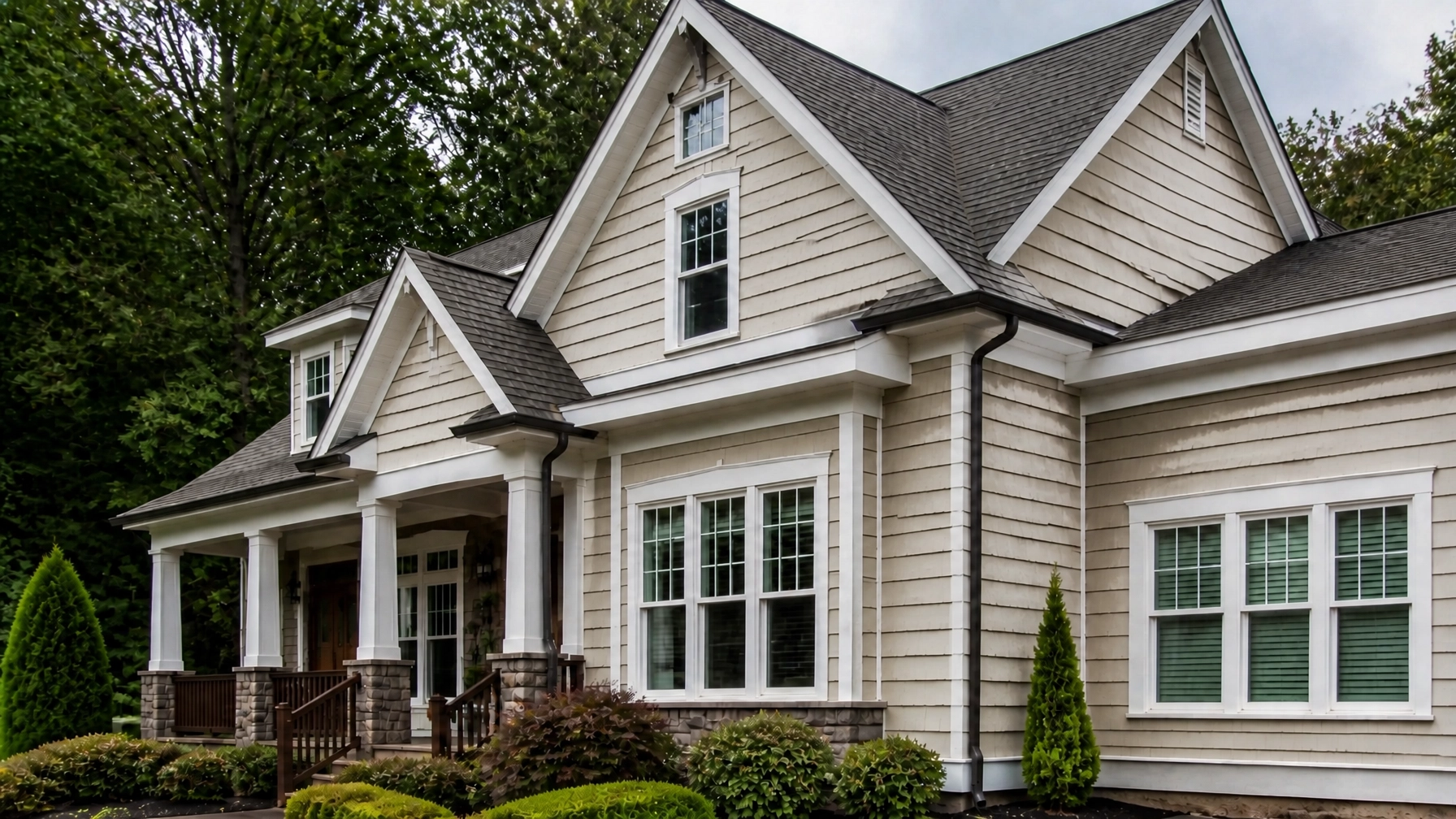
When Pressure Washing Is The Wrong Choice For Your Home Exterior
A house can look “cleaner” after pressure washing and still be quietly damaged.
That is a costly mistake homeowners can run into on mountain properties and neighborhood homes alike, from Blue Ridge cabins tucked under trees to painted exteriors in Ellijay and family homes in Blairsville. High pressure has its place on concrete and other hard surfaces, but it is not the right answer for every exterior cleaning job.
If you are comparing soft washing, siding cleaning, exterior house washing, or house washing services, this quick guide shows what pressure-washing damage can actually look like and why a gentler approach is often the better choice.
QUICK CHECKLIST: IS HIGH PRESSURE A RISK HERE?
Print or save this list before scheduling service:
- Vinyl siding
- Painted wood siding
- Older brick or stone with mortar joints
- Asphalt roof shingles
- Window trim, door trim, soffits, or fascia
- Caulked seams and exterior seals
- Areas with existing cracks, loose panels, or peeling paint
If you checked even one of these, a full-force wash may not be the safest method.
WHY PRESSURE WASHING ISN’T ALWAYS THE ANSWER
Fast results can be misleading.
A surface may look cleaner right away, but high pressure can:
- Force water behind siding panels
- Strip away protective finishes
- Rough up wood fibers
- Knock granules off shingles
- Damage mortar joints in brick and stone
- Drive water into gaps around windows, doors, and trim
That is why professional exterior house washing should start with the material, not just the machine.
SIDING IS THE MAIN TROUBLE SPOT
Siding is one of the most commonly damaged surfaces during improper washing.
Why? Because siding is designed to shed rain from the outside. It is not designed to handle concentrated water blasted up under laps, seams, and edges.
With siding cleaning, more pressure is not automatically better. In many cases, soft washing is the safer solution because it cleans with low pressure and targeted cleaning agents instead of raw force.
WHAT VINYL SIDING DAMAGE LOOKS LIKE

Common signs of damage:
- Cracked panel edges
- Warped or rippled siding
- Loose laps
- Water forced behind panels
- Staining or moisture issues showing up later inside or behind the wall
Why high pressure causes it:
- Vinyl flexes under concentrated force
- Spray aimed upward can push water behind overlaps
- Close-range washing can crack brittle or older panels
If your home needs house washing services in the North Georgia mountains, vinyl siding usually benefits from a gentler cleaning method.
WHAT WOOD SIDING DAMAGE LOOKS LIKE

Common signs of damage:
- Etched grain
- Furred or fuzzy wood fibers
- Splintering
- Peeling paint
- A rough, uneven finish that traps dirt faster
Why high pressure causes it:
- Wood is softer than concrete and easy to scar
- Pressure tears at surface fibers
- Water can soak into exposed wood and slow drying
For painted or stained wood, aggressive washing can turn a cleaning job into a repair job.
WHAT ROOF SHINGLE DAMAGE LOOKS LIKE

Common signs of damage:
- Lifted shingle edges
- Missing granules
- Uneven worn patches
- Shortened roof life
- More vulnerable areas where water and sun can do extra damage
Why high pressure causes it:
- Asphalt shingles rely on granules for protection
- Direct spray can strip away that outer layer
- Upward spray angles can catch and lift shingle tabs
This is one reason roof soft washing is usually the safer choice for roof cleaning. It helps remove organic buildup without treating shingles like a driveway.
WHAT BRICK OR STONE DAMAGE LOOKS LIKE

Common signs of damage:
- Mortar joints blasted out
- Pitting on the face of brick
- Loosened pointing
- A roughened surface that holds moisture and grime more easily
Why high pressure causes it:
- Mortar is often softer than the surrounding masonry
- Older brick and stone can be especially vulnerable
- Focused spray can erode joints before the operator realizes it
Brick may look strong, but that does not mean every wall should be cleaned with maximum pressure.
WHAT WATER DAMAGE AROUND TRIM CAN LOOK LIKE

Common signs of damage:
- Swollen trim boards
- Peeling paint
- Moisture stains
- Leaking around windows or doors
- Caulk failure at joints and seams
Why high pressure causes it:
- Water gets driven into tiny gaps around frames
- Trim, caulk, and seals are weaker than masonry or concrete
- Repeated improper washing can worsen hidden moisture issues
These are easy areas to overlook during pressure washing Blue Ridge GA searches, but they matter just as much as the larger wall surfaces.
SO WHAT SHOULD BE PRESSURE WASHED?
Pressure washing still has an important place.
It is often a strong fit for:
- Concrete driveways
- Sidewalks
- Some patios
- Other durable hardscapes
It is often not the best first choice for:
- Siding
- Roof shingles
- Painted trim
- Wood surfaces
- Delicate exterior details
- Older brick or mortar-heavy areas
The right method depends on the surface.
WHY SOFT WASHING IS SAFER FOR DELICATE SURFACES
Soft washing uses low-pressure application and a cleaning approach designed to break down organic buildup so surfaces can be rinsed more gently.
That matters because it helps:
- Clean siding without forcing water behind panels
- Wash painted surfaces with less risk of stripping
- Remove algae and grime from shingles more safely
- Protect trim, seals, and exterior details
- Deliver a more even result on delicate materials
We keep the process simple and surface-specific, without overdoing pressure or relying on one method for every part of the home.
FAST DECISION GUIDE
Use this quick homeowner guide:
Choose A Softer Approach If You See:
- Vinyl laps or seams
- Painted wood
- Roof shingles
- Aging trim or caulk
- Older mortar joints
- Past water intrusion concerns
Ask More Questions If A Contractor Says:
- “We use the same pressure on everything.”
- “We can blast that right off.”
- “Siding is no problem with high pressure.”
- “We do not need to inspect first.”
A careful contractor should explain why a surface needs soft washing, roof soft washing, or another low-pressure approach before cleaning begins.
A BETTER EXTERIOR HOUSE WASHING PLAN
For many homeowners in Blue Ridge, Ellijay, and Blairsville, the safest cleaning results come from matching the method to the material.
That may mean:
- Soft washing for siding
- Roof soft washing for shingles
- Controlled washing for trim and exterior details
- Targeted pressure washing only where the surface can truly handle it
That is how you protect curb appeal and the materials underneath it.
READY FOR A SAFER CLEAN?
BlueRidge Exterior Cleaning Pros provides professional soft washing, siding cleaning, exterior house washing, and house washing services tailored to your home’s surfaces. We proudly serve homeowners in Blue Ridge, Ellijay, and Blairsville, Georgia with reliable care, attention to detail, and friendly service you can feel good about.
If you want help choosing the right cleaning method, we’re here to make it simple.
Request your free, no-obligation quote or call (706) 200-1751 today. We’ll take a close look at your siding, roofline, trim, and other exterior surfaces, then recommend the safest way to get your home looking fresh and clean.