
Why Georgia Red Clay Stains Are So Hard to Remove (and Why They Keep Coming Back)
It does not take a major storm or a muddy construction project to leave a mark on your home. Across driveways, siding, and walkways in Blue Ridge, around cabin properties near Ellijay, and on sloped lots throughout Blairsville, Georgia red clay has a way of showing up fast and hanging on stubbornly.
Red clay can stain:
- Concrete driveways
- Sidewalks and walkways
- Patios and porches
- Vinyl and painted siding
- Stucco, brick, and exterior walls
- Areas disturbed by grading, landscaping, or construction
These stains can make an otherwise clean home look tired. They may also return after the next heavy rain, even when the surface was recently washed.
So why is Georgia red clay so difficult to remove? The answer is found in the minerals inside the soil, the porous nature of many exterior surfaces, and the way rainwater moves across North Georgia properties.
What Georgia Red Clay Stains Actually Are
Georgia red clay is not simply dirt sitting on top of a surface.
Its strong red and orange color comes mainly from iron oxide minerals. Hematite and goethite are common iron-bearing minerals that give many soils and rocks their red, brown, and yellow coloring. The same general family of iron compounds is associated with rust.
When rain, irrigation, runoff, or construction activity moves clay across your property, fine particles can settle into the surface. Water helps carry the mineral-rich material into small pores, texture lines, joints, and imperfections.
As the moisture dries, the iron-rich residue can remain tightly attached. Instead of behaving like loose dust, the stain begins to look more like a rust-colored mark embedded in the material.
That is why a quick rinse often produces only a partial improvement.
Why Red Clay Bonds So Easily to Concrete
Concrete may look solid and smooth, but it contains a network of microscopic pores and capillaries. These small openings can absorb water and hold onto contaminants carried by that water.
The Global Cement and Concrete Association describes how porous concrete can filter and retain pollutants from runoff. While each concrete surface is different, the basic idea is important for homeowners: moisture and mineral particles can move into the surface rather than staying completely on top.
Red clay is especially noticeable on light-colored concrete because the orange and reddish tones contrast sharply with the gray surface.
The stain may become more persistent when:
- The concrete is older or weathered
- The surface has a rough broom finish
- The area receives repeated runoff
- The clay sits wet for extended periods
- The driveway or walkway has cracks and low spots
- Construction traffic presses clay into the concrete
- The surface has never received professional maintenance
This is one reason professional driveway cleaning is often more involved than simply removing loose dirt.
Why Plain Pressure Washing May Not Be Enough
Pressure washing is an excellent method for cleaning many durable outdoor surfaces. It can remove surface dirt, algae, mud, and other buildup from concrete, patios, sidewalks, and driveways.
However, red clay stains are not always sitting loosely on the surface.
High-pressure water may lighten the appearance without removing the iron-rich residue underneath. In some cases, aggressive or poorly controlled washing can spread wet clay across a larger area or force slurry into surface pores instead of fully lifting the stain.
More pressure does not automatically mean better results.
Concrete requires the right balance of pressure, water flow, surface condition, and stain treatment. Using too much pressure can also leave visible cleaning marks, damage the surface paste, or create an uneven appearance.
Professional driveway pressure washing should be approached as a surface-specific service, especially when red clay is mixed with algae, tire marks, rust, or years of grime.
At BlueRidge Exterior Cleaning Pros, we evaluate the surface and the stain before choosing the appropriate professional cleaning method. We handle the difficult work while you enjoy a cleaner, brighter result.
Why Red Clay Stains Return After Rain
North Georgia’s hills, slopes, driveways, wooded lots, and changing weather can create many paths for red clay runoff.
A stain may return when fresh soil or sediment is carried toward your home by:
- Heavy rain
- Downspout discharge
- Roof runoff
- Sloped lawns
- Unfinished landscaping
- Gravel or dirt driveways
- Construction entrances
- Eroding soil beside walkways
- Improper drainage
Rainwater does not always travel straight downhill. It can move across a driveway, splash against siding, collect beside a foundation, or flow along the edge of a sidewalk.
If the source of the clay remains nearby, professional cleaning can restore the surface, but new runoff may create fresh discoloration later. This does not mean the cleaning failed. It often means the property continues to receive iron-rich soil from the surrounding landscape.
A professional can help identify the visible runoff path and explain what may be contributing to the recurring stain.
Red Clay on Driveways and Concrete
Driveways are some of the most common places to see Georgia red clay stains. Vehicles can track wet soil onto the concrete, while rain can wash clay from lawns, gravel, or nearby construction areas.
Common signs include:
- Orange or reddish tire-shaped marks
- Rust-colored streaks near the driveway edge
- Clay buildup around expansion joints
- Brown runoff lines below sloped areas
- Discoloration near garage doors
- Dark grime mixed with red or orange staining
A thorough driveway cleaning can improve the entire surface instead of leaving obvious clean and dirty sections. BlueRidge Exterior Cleaning Pros serves homeowners throughout Blue Ridge, Ellijay, Blairsville, and surrounding North Georgia communities.

Red Clay on Siding and Exterior Walls
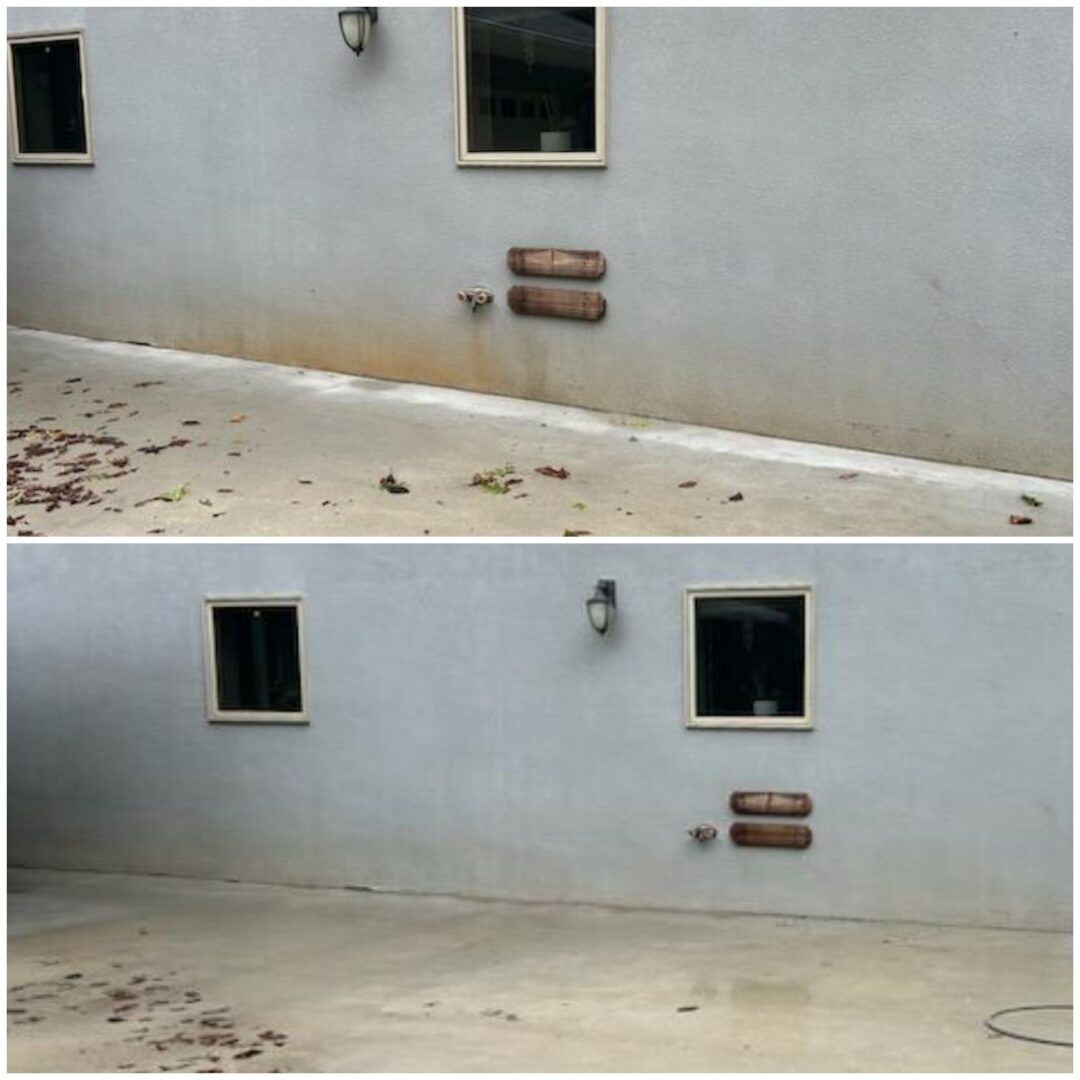
Red clay can also show up on siding and exterior walls, especially near the bottom of the home.
You may notice:
- Orange bands along the foundation line
- Clay splash marks behind downspouts
- Streaks beneath roof edges
- Discoloration around exterior steps
- Muddy marks near landscaping beds
- Red residue on vinyl, painted, or textured siding
Siding is not cleaned the same way as concrete. It may be more delicate, and excessive pressure can damage finishes, force water behind panels, or leave marks.
That is why soft washing or another appropriate professional cleaning method is often needed for siding and exterior walls. Our house washing services are customized to the material and condition of your home.
With professional exterior house washing, we can address red clay alongside other buildup such as mildew, algae, pollen, dirt, and atmospheric grime. You can sit back while our friendly team takes care of the exterior details.

Patio, Walkway, and Sidewalk Discoloration
Patios, porches, and walkways can collect clay from surrounding grass, flower beds, gravel, and foot traffic. These surfaces may also stay damp longer because of shade from trees or nearby structures.
Red clay discoloration often appears as:
- Uneven orange patches
- Reddish marks along grass edges
- Splashing near steps and entrances
- Clay tracked onto patio slabs
- Brown lines following water flow
- Discoloration in textured or broom-finished concrete
Professional sidewalk cleaning and patio cleaning can refresh these high-visibility areas and make your outdoor spaces feel more welcoming.

Stains After Grading or Construction
New grading, driveway work, landscaping, foundation projects, and home construction can expose large amounts of red soil.
After the work is complete, homeowners may find clay stains on:
- Newly installed concrete
- Existing driveways
- Foundation walls
- Siding
- Garage floors and entrances
- Walkways and curbs
- Patio slabs and retaining walls
Fresh concrete and newly finished surfaces deserve careful attention. Construction residue may include clay, dust, adhesive material, and other debris, so the best cleaning approach depends on the surface and the type of buildup.
If your property has recently undergone grading or construction, professional cleaning can help restore the finished appearance without treating every surface the same way.
North Georgia Red Clay Stain Checklists
Use this quick checklist before scheduling service:
- Are reddish-orange marks visible on your driveway?
- Do stains follow a slope, downspout, or drainage path?
- Is clay collecting near the garage or foundation?
- Are your sidewalks or patio edges discolored?
- Is red clay visible on siding or exterior walls?
- Did the staining begin after grading or construction?
- Has pressure washing only lightened the marks?
- Do the stains return after rain?
- Are dirt, algae, or mildew mixed with the clay?
- Would a cleaner exterior help before selling or hosting guests?
If you checked any of these boxes, a professional evaluation can help you choose the right next step.
Restore Your Home’s Clean, Bright Appearance
Georgia red clay is part of the North Georgia landscape, but it does not have to define the appearance of your home.
Whether you need pressure washing Blue Ridge GA, driveway cleaning in Ellijay, sidewalk cleaning in Blairsville, or soft washing for siding, BlueRidge Exterior Cleaning Pros is ready to help. We use professional workmanship, careful surface evaluation, attention to detail, and customized cleaning methods to create a cleaner, more inviting property exterior.
Visit our pressure washing services page to learn more about residential exterior cleaning.
Ready for service? Request your free, no-obligation quote or call (706) 200-1751. We serve Blue Ridge, Ellijay, Blairsville, Georgia, and surrounding North Georgia areas.
We’ll take care of the difficult work so you can enjoy a spotless, refreshed home exterior with a smile of satisfaction.